Overview of India’s Role in the Global Banana Trade
India stands as the largest banana-producing country in the world, supported by diverse agricultural zones, favorable climate conditions, and continuous cultivation cycles throughout the year. Despite this strong production base, its historical presence in global banana export markets has been relatively limited compared to leading exporters.
In recent years, however, the situation has changed significantly. Improvements in post-harvest handling, logistics infrastructure, and international trade engagement have positioned India as an emerging supplier in the global fresh fruit supply chain.
Today, Indian bananas are increasingly considered by international buyers as a scalable sourcing option for wholesale and retail distribution networks.
Key Banana Varieties Available for Export from India
India offers a wide range of banana varieties, each serving different market needs and end-use applications.
Cavendish Bananas (Main Export Variety)
Cavendish is the dominant variety in international trade due to its uniformity and commercial suitability.
Key characteristics:
- Consistent size and shape
- Mild flavor profile suitable for global consumers
- Strong performance in cold chain logistics
- High acceptance in supermarket retail channels
This variety forms the backbone of most export shipments.
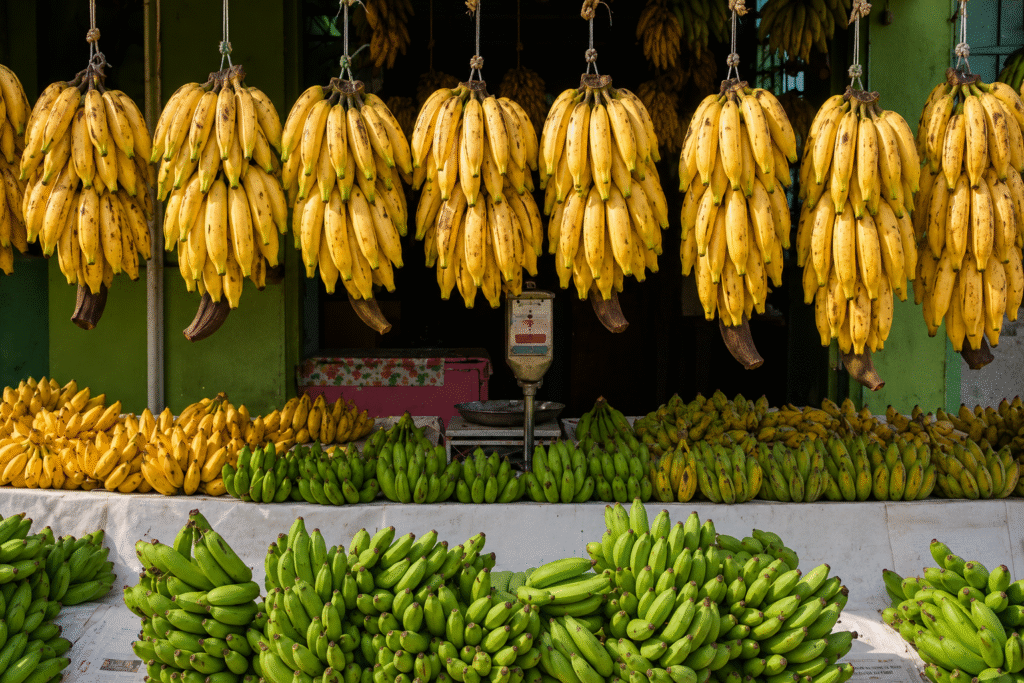
Nendran Bananas
Primarily grown in southern India, Nendran bananas are known for their dense texture and culinary applications.
They are often used in:
- Cooking and frying
- Ethnic food markets
- Specialized retail segments
Red Bananas
A niche but growing export variety, red bananas are positioned in premium fruit categories.
They are characterized by:
- Distinct reddish skin color
- Sweet aroma and flavor
- Lower production volume compared to Cavendish
Other Regional Varieties
Certain local classifications, such as Robusta-type bananas, are also cultivated and exported depending on buyer requirements and regional availability.
Understanding variety selection is essential for aligning supply with market demand and retail positioning.
Export Standards and Quality Control Requirements
For international markets, bananas must comply with strict quality and handling standards to ensure product integrity throughout the supply chain.
Physical Grading and Uniformity
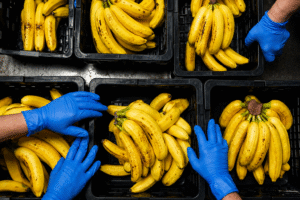
Export-grade bananas are sorted based on:
- Size and length consistency
- Cluster structure
- Visual appearance
- Defect-free surface condition
Uniformity plays a critical role in retail presentation and packaging efficiency.
Harvest Maturity Stage
Bananas are harvested at controlled maturity levels to ensure proper ripening during transit and distribution.
This allows:
- Stable transportation performance
- Predictable ripening cycles
- Reduced spoilage risk
Compliance and Safety Standards
Depending on destination markets, exporters must comply with:
- Phytosanitary requirements
- Pesticide residue limits
- Import regulations specific to each region
Markets such as Europe require particularly strict compliance frameworks.
Supply Availability and Production Cycle
One of India’s key strengths in banana supply is its relatively stable year-round production capacity.
Due to multiple cultivation regions operating under different climatic conditions, India is able to maintain continuous harvest cycles across the year.
Advantages of Continuous Supply
This structure supports:
- Long-term contracts with importers
- Predictable shipment planning
- Stable pricing conditions
Market Stability Considerations
While supply is generally consistent, seasonal weather conditions such as heavy monsoon rainfall or extreme climate events can temporarily affect logistics and harvest timing.
For this reason, buyers often prioritize working with experienced suppliers who can manage regional sourcing flexibility.
Packaging Systems and Cold Chain Management
Maintaining fruit quality during export requires efficient packaging and temperature-controlled logistics systems.
Export Packaging Design
Bananas are typically packed using:
- Ventilated corrugated cartons
- Protective liners to reduce friction damage
- Structured stacking to prevent pressure injury
Packaging design directly impacts shelf life and transportation stability.
Pre-Cooling and Ripening Control
Before shipment, bananas undergo pre-cooling processes designed to slow down natural ripening activity.
This ensures:
- Extended shelf life during transit
- Better control over ripening stages at destination
- Reduced waste during distribution
Refrigerated Transport Systems
Most international shipments rely on refrigerated containers to maintain optimal temperature conditions.
Typical conditions include:
- Controlled temperature range
- Humidity regulation
- Ethylene gas management (where applicable)
These factors are critical for preserving quality over long distances.
Major Import Destinations for Indian Bananas
Indian bananas are exported to a growing number of international markets, with demand driven by affordability and supply scalability.
Middle East Region
This is one of the strongest markets due to:
- Geographic proximity
- Fast shipping routes
- High consumption of fresh fruits
- Strong retail distribution networks
Southeast and South Asia
Regional trade continues to expand as demand for affordable fresh produce increases.
European Markets
Although more regulated, Europe represents a potential growth area for exporters who meet compliance and quality standards.
African Markets
Several African countries import bananas for retail and institutional food supply due to cost competitiveness.
Key Factors Driving Global Demand Growth
Several macro-level trends are contributing to the increasing relevance of Indian bananas in international trade:
Diversification of Supply Chains
Importers are actively reducing dependency on traditional export origins and seeking alternative suppliers.
Rising Demand for Fresh Produce
Global consumption of fresh fruit continues to increase, especially in urban retail markets.
Cost Efficiency Requirements
Indian production advantages enable competitive pricing structures for large-scale buyers.
Infrastructure Improvements
Ongoing investments in cold storage, packaging, and logistics are improving export reliability.
Challenges and Operational Considerations
Despite strong growth potential, banana exports from India still face operational challenges:
- Perishability of fresh produce
- Sensitivity to temperature fluctuations
- Dependence on logistics coordination
- Regional variability in production conditions
Successful import operations typically depend on supplier reliability and supply chain management efficiency.
Conclusion
India is steadily strengthening its position in the global banana export industry. With its large-scale production capacity, expanding logistics infrastructure, and improving quality systems, the country is becoming an increasingly important sourcing origin for international buyers.
As global trade patterns continue to evolve, Indian bananas are expected to play a more significant role in diversified supply strategies for wholesalers, distributors, and retail chains.
For importers seeking scalable and cost-effective sourcing options, India offers a combination of production strength and improving export capability that supports long-term trade partnerships.