The global market for Middle Eastern dates continues to expand in 2026 as consumers increasingly seek healthier snacks, natural sweeteners, and premium dried fruit products. Across supermarkets, wholesale distribution networks, and private-label food brands, dates are becoming a fast-growing category with strong international demand.
For importers and wholesale buyers, one of the most common sourcing questions today is:
Should you import Iranian dates or Saudi dates?
Both countries are globally recognized producers with strong reputations in the dates industry. Each offers unique varieties, flavor profiles, and commercial advantages. However, from a B2B sourcing perspective, differences in pricing, export flexibility, supply capacity, and market positioning can significantly affect purchasing decisions.
This guide compares Iranian dates and Saudi dates from the perspective of importers, distributors, and commercial buyers looking for the best balance between quality, profitability, and long-term sourcing potential.
The Growing Global Demand for Middle Eastern Dates
The international dates market has grown rapidly over the past several years, driven by changing consumer preferences and the expansion of health-focused food categories.
Modern consumers are increasingly interested in:
- Natural sweeteners
- Clean-label products
- Healthy snacks
- Functional foods
- Plant-based diets
- Natural energy sources
Dates fit perfectly into these trends because they are naturally sweet, minimally processed, and versatile across multiple food applications.
Today, Middle Eastern dates are widely sold through:
- Supermarkets
- Organic food stores
- Wholesale distribution channels
- Bakery industries
- Snack manufacturers
- Foodservice suppliers
As global demand rises, importers are comparing different origins more carefully to identify which sourcing strategy offers the strongest commercial advantage.
Among the leading suppliers, Iran and Saudi Arabia stand out as two of the most influential players in the international dates market.
Overview of Iranian Dates
Iran is one of the world’s largest date-producing countries and offers a highly diverse portfolio of export-quality dates suited for multiple market segments.
Iranian dates are especially known for:
- Variety diversity
- Competitive pricing
- Rich flavor
- Flexible wholesale supply
- Strong cost-to-quality value
Popular Iranian Date Varieties
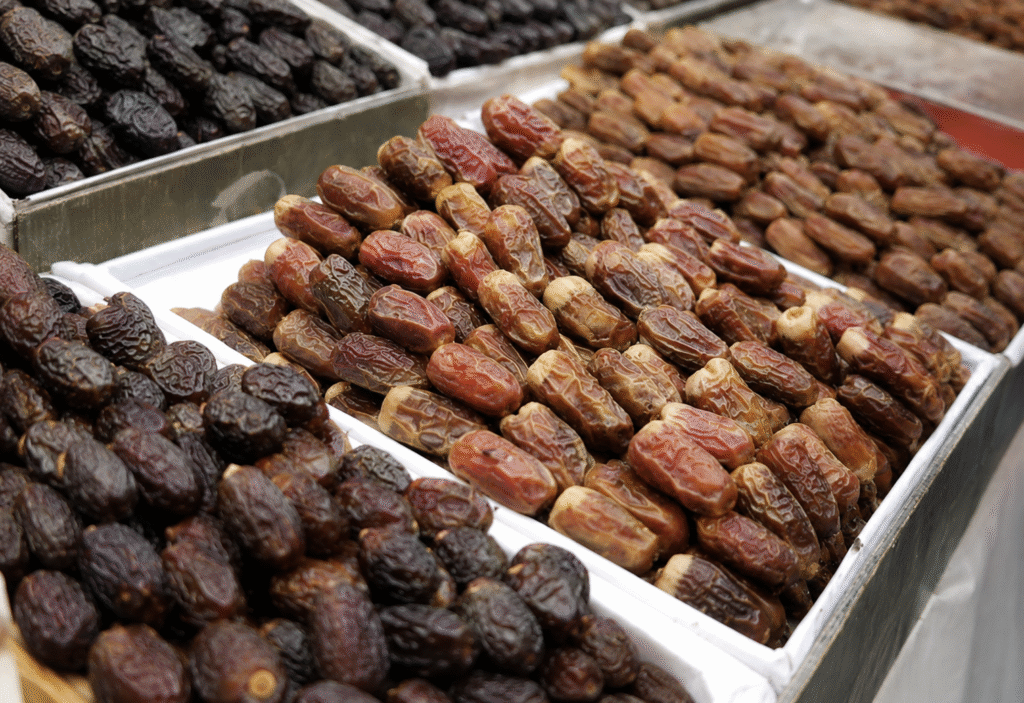
Mazafati Dates
Mazafati dates are among the most recognized Iranian date varieties internationally.
They are known for:
- Soft texture
- Dark appearance
- Rich sweetness
- Fresh, juicy profile
Mazafati dates are particularly popular in premium retail packaging and supermarket categories.
Kabkab Dates
Kabkab dates are widely used in wholesale and commercial distribution.
Their advantages include:
- Balanced sweetness
- Attractive pricing
- Large size
- Good commercial versatility
Kabkab dates are often considered one of the best choices for cost-conscious wholesale buyers.
Piarom Dates
Piarom dates are regarded as one of the most premium Iranian varieties.
They feature:
- Semi-dry texture
- Elegant appearance
- Thin skin
- Rich caramel flavor
Piarom dates are highly attractive for gourmet and luxury food markets.
Sayer Dates
Sayer dates are commonly used for industrial applications and bulk export.
Their lower moisture content supports:
- Longer shelf life
- Easier transportation
- Large-volume trade
- Food manufacturing applications
Flavor and Texture
Iranian dates are generally recognized for their rich sweetness and soft texture profiles.
Many varieties feature:
- Caramel notes
- Tender consistency
- Natural sweetness
- Moist mouthfeel
This makes Iranian dates highly appealing in retail markets where texture and eating experience strongly influence purchasing behavior.
Export Strengths
Iranian date exporters have significantly improved international standards in recent years.
Many suppliers now offer:
- Modern packaging systems
- Export-grade sorting
- Improved cold storage
- Flexible private-label solutions
- Competitive container pricing
Iran also benefits from strong production scalability, making it attractive for wholesale buyers seeking reliable long-term supply.
Overview of Saudi Dates
Saudi Arabia is another major global player in the dates industry and is especially known for premium and culturally recognized date varieties.
Saudi dates are often positioned as high-value premium products in international markets.
Popular Saudi Date Varieties
Medjool Dates
Medjool dates are among the most famous premium dates worldwide.
They are known for:
- Large size
- Thick flesh
- Sweet flavor
- Luxury positioning
Although Medjool dates are grown in multiple countries, Saudi Arabia remains an important supplier within the premium category.
Ajwa Dates
Ajwa dates are highly recognizable due to their cultural and religious significance.
They typically feature:
- Dark color
- Soft texture
- Mild sweetness
Ajwa dates often occupy a premium niche market.
Safawi Dates
Safawi dates are valued for:
- Smooth texture
- Deep color
- Balanced sweetness
They are commonly sold in retail and specialty food channels.
Sukkari Dates
Sukkari dates are known for their:
- Golden appearance
- Soft bite
- Honey-like sweetness
They are especially popular in Gulf-region retail markets.
Flavor and Texture
Saudi dates are generally associated with:
- Rich sweetness
- Dense texture
- Premium positioning
- Large fruit sizes
Many Saudi varieties are marketed as luxury products, particularly in high-end retail environments.
Export Strengths
Saudi Arabia has invested heavily in agricultural branding and premium packaging.
Saudi exporters often focus on:
- Luxury presentation
- Retail-ready packaging
- Premium gifting markets
- Branded export positioning
This approach works especially well in premium consumer segments.
Iranian Dates vs Saudi Dates: Key Differences
Taste and Texture
Both Iranian and Saudi dates offer excellent flavor profiles, but their characteristics differ slightly.
Iranian dates are often preferred for:
- Softer texture
- Juicier consistency
- Balanced sweetness
- Greater variety diversity
Saudi dates are often associated with:
- Dense flesh
- Larger fruit size
- Luxury sweetness
- Premium presentation
For retail markets focused on everyday consumption, Iranian varieties such as Mazafati and Kabkab may appeal to broader consumer segments.
For premium gifting or luxury positioning, Saudi varieties like Ajwa and Medjool often perform strongly.
Variety Selection
Iran has one of the widest selections of commercial date varieties in the global market.
This allows importers to source products for multiple pricing tiers, including:
- Budget wholesale
- Mid-range retail
- Premium specialty markets
- Industrial food applications
Saudi Arabia, while offering highly recognized premium varieties, generally focuses on fewer commercially dominant types.
For buyers seeking product diversification, Iranian sourcing often provides greater flexibility.
Pricing and Cost Efficiency
Pricing is one of the biggest differentiators in this import comparison.
In many international markets, Iranian dates offer a stronger cost-to-quality ratio compared with Saudi dates.
Importers frequently choose Iranian dates because they provide:
- Competitive wholesale pricing
- Flexible order structures
- Lower sourcing costs
- Wide commercial applicability
Saudi dates, particularly premium varieties, are often positioned at higher price points.
For wholesale buyers operating in competitive retail environments, pricing flexibility can significantly affect profitability.
This is one reason many distributors are increasingly exploring Iranian dates in 2026.
Shelf Life and Logistics
Shelf life depends heavily on moisture content and variety type.
Iranian semi-dry varieties such as:
- Piarom
- Sayer
- Zahedi
typically provide strong transportation performance and longer storage stability.
Saudi premium soft varieties may require more controlled logistics depending on destination market conditions.
From a logistics perspective, many importers prefer sourcing a mix of soft and semi-dry Iranian dates because it allows better adaptation to different shipping environments.
Wholesale Availability
Iran’s large production scale gives exporters strong wholesale flexibility.
This benefits buyers looking for:
- Large container volumes
- Stable annual supply
- Multiple packaging options
- Consistent sourcing programs
Saudi suppliers often focus more heavily on premium retail positioning rather than large-scale commercial flexibility.
For industrial buyers and food distributors, Iranian exporters may offer broader operational scalability.
Retail Market Appeal
Saudi dates often carry strong premium branding appeal, especially in luxury or gift-oriented retail categories.
However, Iranian dates perform extremely well in:
- Supermarket retail
- Mainstream consumer markets
- Bulk distribution
- Private-label programs
Their balance of quality and affordability supports wider market accessibility.
For many retailers, this broader affordability increases sales potential across larger customer segments.
Which Dates Are Better for Different Buyers?
For Supermarkets
Supermarkets often prioritize:
- Consistent quality
- Competitive pricing
- Attractive appearance
- Shelf stability
Iranian dates are frequently well-suited for supermarket environments because they offer multiple retail-friendly varieties across different price points.
For Wholesale Distributors
Wholesale distributors usually focus on:
- Margin potential
- Container scalability
- Reliable supply
- Logistics efficiency
Iranian suppliers often provide stronger flexibility for large-scale wholesale operations.
For Premium Retail Brands
Luxury food retailers and gourmet brands may prefer premium Saudi varieties such as Ajwa or Medjool for high-end branding.
However, premium Iranian dates like Piarom also compete effectively in upscale specialty markets.
For Cost-Conscious Importers
Importers seeking strong commercial value frequently choose Iranian dates because of their attractive cost-to-quality advantage.
This is especially important in price-sensitive retail environments where maintaining profitability is essential.
Why Many Importers Are Exploring Iranian Dates in 2026
Several factors are contributing to the rising international interest in Iranian dates.
These include:
- Competitive pricing
- Export market expansion
- Improved packaging standards
- Better logistics capabilities
- Strong supply scalability
- Wide variety availability
Many importers now view Iranian sourcing as an opportunity to access premium Middle Eastern dates while maintaining commercial flexibility.
As global demand continues growing in 2026, buyers are increasingly prioritizing suppliers that can deliver both quality and long-term operational efficiency.
Iranian exporters are becoming more competitive in exactly these areas.
What Importers Should Consider Before Choosing a Supplier
Regardless of origin, choosing the right supplier remains essential.
Importers should carefully evaluate:
Certifications
Ensure suppliers meet food safety and export compliance requirements for the destination market.
Exporter Reliability
Reliable communication, documentation accuracy, and shipment consistency are critical for long-term partnerships.
Packaging Quality
Packaging directly affects retail presentation and transportation durability.
Professional exporters should offer packaging tailored to wholesale, retail, and private-label needs.
Shipment Capability
Buyers should verify:
- Container loading capacity
- Lead times
- Cold storage access
- Logistics coordination
Product Consistency
Consistency across shipments is essential for maintaining retail standards and customer satisfaction.
Final Thoughts
Both Iranian dates and Saudi dates hold strong positions in the global premium dates market.
Saudi dates are often associated with luxury retail and premium cultural positioning, particularly for varieties like Ajwa and Medjool.
Iranian dates, meanwhile, offer a highly attractive combination of:
- Variety diversity
- Commercial scalability
- Competitive pricing
- Export flexibility
- Strong cost-to-quality value
For many importers and wholesale buyers in 2026, Iranian sourcing provides broader opportunities across supermarket retail, wholesale distribution, private-label production, and food manufacturing.
Ultimately, the best choice depends on the buyer’s target market, pricing strategy, and sourcing priorities.
Businesses looking for scalable supply, flexible product selection, and export-quality Middle Eastern dates are increasingly turning toward Iranian date exporters as a long-term sourcing partner.
Looking for a reliable Iranian dates supplier? Contact our team to discuss wholesale pricing, export opportunities, and customized sourcing solutions for your market.
FAQ
Are Iranian dates cheaper than Saudi dates?
In many cases, yes. Iranian dates often provide more competitive wholesale pricing and a stronger cost-to-quality ratio compared with premium Saudi varieties.
Which dates are better for wholesale import?
This depends on the target market. Iranian dates are often preferred for large-scale wholesale distribution due to pricing flexibility and variety diversity, while Saudi dates may perform strongly in premium retail niches.
What is the difference between Mazafati and Medjool dates?
Mazafati dates are typically softer, juicier, and darker in color, while Medjool dates are larger, denser, and often positioned as luxury premium dates.
Are Iranian dates good for supermarkets?
Yes. Iranian dates are widely used in supermarket retail because they offer strong visual appeal, multiple packaging options, and competitive pricing.
Why are importers choosing Iranian dates in 2026?
Importers are increasingly choosing Iranian dates due to export growth, improved quality standards, supply scalability, and strong commercial value in global markets.